
<img height="1" width="1" style="display:none;" alt="" src="https://px.ads.linkedin.com/collect/?pid=3031132&amp;fmt=gif">

Reference-Based Pricing That Brings Healthcare Costs Into Focus

TrueCost is Custom Design Benefits’ structured approach to reference-based pricing. It replaces traditional PPO networks with a clear, benchmark-based model tied to Medicare rates.

Instead of relying on negotiated pricing that varies widely and lacks visibility, employers know exactly how care is priced and why.

Most employers see a meaningful reduction in total healthcare spend while gaining far more control over how their plan performs.

See How TrueCost Works
Two analysts reviewing healthcare cost dashboards on multiple monitors
A doctor reviewing care details with a patient on a tablet

What Is Reference-Based Pricing?

Reference-based pricing is a way to pay for healthcare using a consistent benchmark rather than negotiated network rates. Most commonly, that benchmark is a percentage above Medicare.

With this approach, the plan pays a defined and transparent amount for each service. That amount does not change based on network contracts or carrier negotiations.

Traditional PPO plans operate differently. Prices are negotiated behind the scenes, often with wide variation for the same service. Employers rarely see how those numbers are set.

TrueCost brings structure to that process so pricing is visible, consistent, and easier to manage.

Why Employers Are Moving Away from PPO Networks

In a traditional network model, the same procedure can be priced very differently depending on the provider. Those differences are often hidden, which makes it difficult to control costs over time.

TrueCost changes the foundation of how pricing works. Employers gain:

A consistent method for reimbursing care

Visibility into how every dollar is spent

Fewer unexpected cost increases year over year

A clearer connection between plan design and financial outcomes

This shift allows organizations to manage healthcare as a controllable expense rather than a recurring surprise.

How TrueCost Works in Practice

TrueCost is not just a pricing model. It is a managed process supported by CDB’s administration, provider engagement, and member advocacy.

A defined reimbursement structure is set using Medicare as the baseline. Members are not restricted to providers of the health systems and CDB has direct contracts with the providers to ensure alignment.

When a provider has questions about payment, CDB engages directly. That includes explaining the model, reviewing charges, and negotiating when appropriate.

If a member receives a balance bill, CDB steps in to resolve it with our integrated Member Advocacy team. The goal is to remove friction for both the employer and the employee while maintaining fair payment to providers that is based on pre- and post-service data.

See the Results
A dial gauge pointing from HIGH toward LOW healthcare cost

TrueCost Compared to a Traditional PPO

PPO plans rely on negotiated rates that vary by carrier and contract. Employers often do not see how those rates are determined or why they increase.

TrueCost takes a different approach. Pricing is anchored to a known benchmark, which creates consistency across providers and services.

Instead of reacting to renewal increases, employers can anticipate costs with far greater accuracy. That shift alone changes how benefits are planned and managed.

See the Results
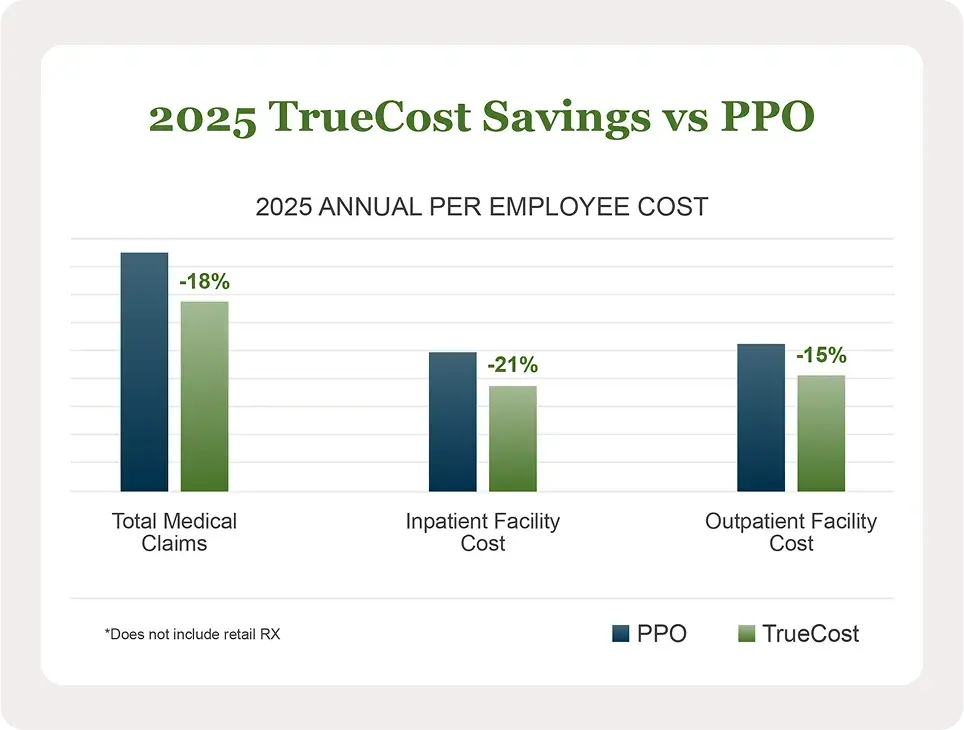
Bar chart comparing 2025 annual per-employee cost for a PPO plan versus TrueCost

When TrueCost Is the Right Fit

TrueCost tends to work best for employers who are looking for more control over long-term healthcare spending.

It is often a strong fit for organizations that have experienced steady cost increases and want a different approach. Employers who value transparency and are open to moving beyond traditional networks typically see the most benefit.

If that sounds like your organization or your client, talk with our team and we can explore your options.

A balance scale weighing healthcare savings against rising costs

Balance bills in 2025

What It Means for Members

Copay only plan Max out-of-pocket Zero deductible

Managing Risk and Protecting the Member Experience

Reference-based pricing raises valid questions, especially around disruption and provider response. Those concerns are addressed directly within the TrueCost model.

CDB has direct contracts with providers and manages provider communication from the start. When questions arise, they are handled by a team that understands both the billing process and the local market.

Members are not left to navigate issues on their own. Advocacy support is built into the plan, so members have a clear path to resolution if something feels off.

Balance bills can happen, but they are actively managed. In most cases, they are resolved without the member needing to intervene. Employers are not left carrying that burden either.

Proven Financial Impact

Employers using TrueCost typically reduce total healthcare spend by 15 to 30 percent. Just as important, those costs become more predictable from year to year.

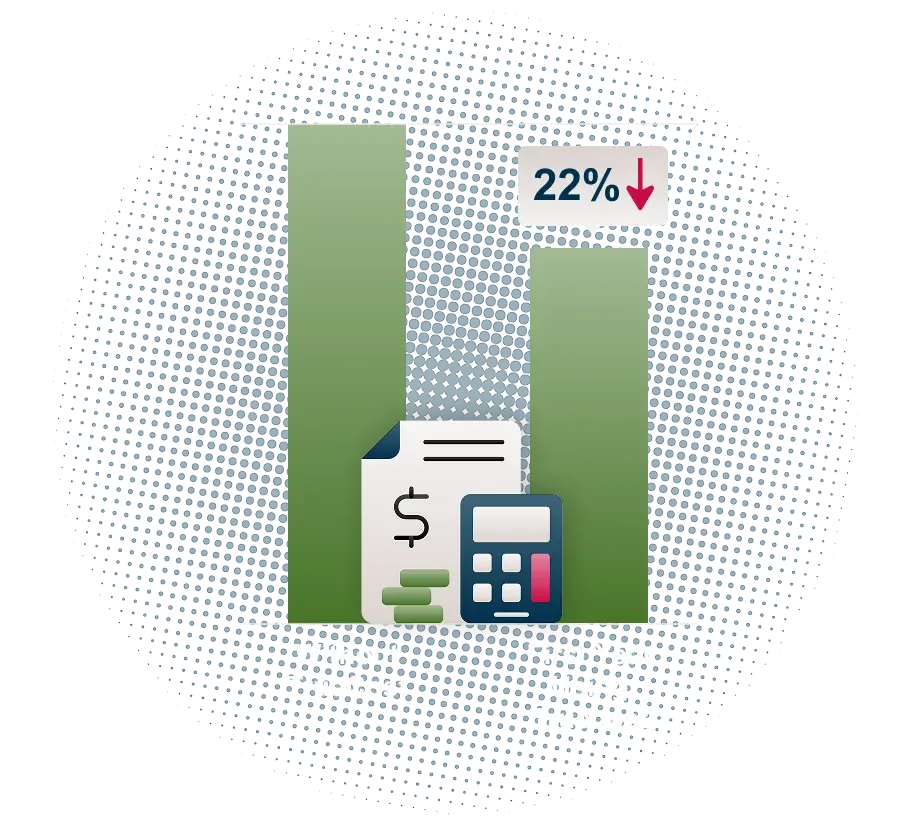
For example, a regional manufacturing company with just over 200 members transitioned from a PPO plan to TrueCost. In the first year, total plan spend dropped by 22 percent. That improvement held steady into the following year, with far fewer unexpected cost spikes.

CDB has been administering self-funded plans since 1991. TrueCost builds on that experience with a model that has been tested across a range of employer groups and industries.

See the Impact
Bar chart showing a 22% drop in cost in the first year using TrueCost

Regional Experience Matters

Healthcare pricing is not the same in every market. Provider behavior, billing patterns, and cost variation all differ by region.

CDB works closely with employers domiciled in Ohio, Kentucky, and Indiana, with members nationwide. We understand how local providers operate. That experience plays a direct role in how TrueCost is implemented and managed.

This is not a generic national model. It is applied with local insight and ongoing support.

Talk to Our Team in Cincinnati

How TrueCost Fits Into Your Overall Strategy

TrueCost is often one part of a broader plan strategy. It works alongside pharmacy management, medical management, and member advocacy to create a more complete approach to cost control.

Each component reinforces the others, which helps employers maintain both financial performance and a positive employee experience.

Request a Plan Evaluation

Frequently Asked Questions

Reference-based pricing is a reimbursement model that pays providers using a consistent benchmark, usually tied to Medicare, rather than negotiated network rates.

A person checking healthcare plan details on their phone

See If TrueCost Is a Fit for Your Plan

TrueCost offers a clear way to understand and control healthcare spending without adding unnecessary complexity.